
Nonprofit Strategic Communications
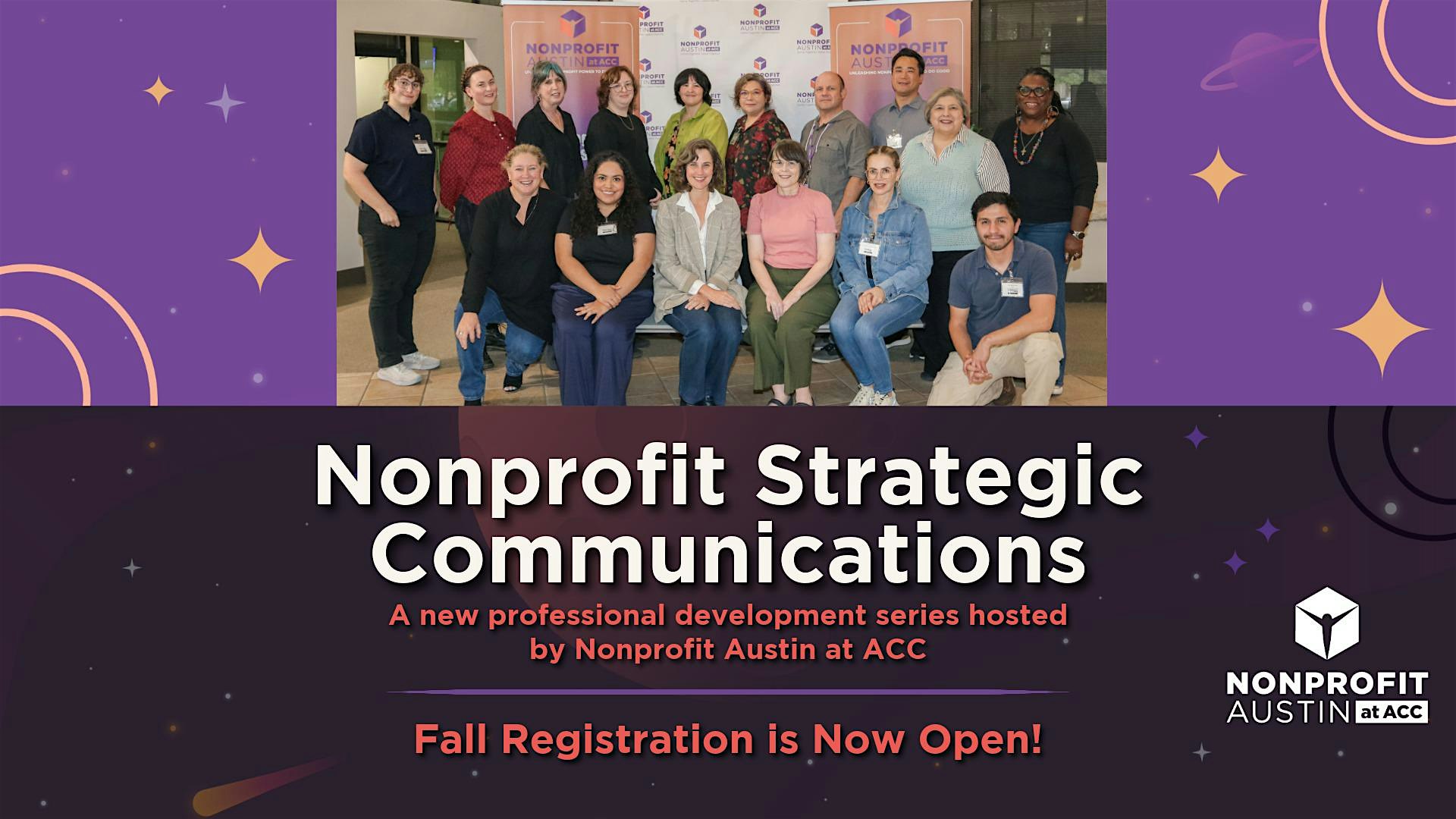
Nonprofit Strategic Communications
The following sessions will be held from 9:30am – 3:30pm on these dates:
- September 8
- September 15
- September 22
- September 29
- October 6
- October 13
- October 20
- October 27
By the end of the program, participants will:
1. Build and deliver a complete Strategic Communication Plan
- Develop a written Strategic Communication Plan & Execution Roadmap tailored to their organization
- Include: audience, messaging, stakeholder strategy, internal alignment, external communication, channels, and tactics
- Present the plan in the final session and receive structured feedback
2. Apply audience-centered communication to improve message clarity
- Analyze at least one key audience segment and redesign messaging to improve clarity and relevance
- Demonstrate improved message effectiveness through peer or instructor feedback
3. Develop and implement a clear messaging and impact framework
- Create a core messaging framework (3–5 key messages + impact narrative)
- Apply this framework consistently across at least two communication contexts (e.g., donor, community, internal)
4. Design a stakeholder engagement and partnership strategy
- Identify and prioritize 5–10 key stakeholders or partners
- Develop a targeted engagement approach for at least 2 stakeholder groups
5. Improve internal alignment and reduce communication breakdowns
- Diagnose at least one internal communication breakdown in their organization
- Propose and document specific communication practices or systems to improve alignment
6. Develop an external communication and reputation strategy
- Create a basic external communication plan, including audience, messaging, and media approach
- Outline a crisis or high-stakes communication response framework
7. Select and justify strategic communication channels and tactics
- Identify 2–3 priority communication channels (e.g., events, campaigns, partnerships)
- Design one communication initiative (event, campaign, or outreach strategy) aligned with organizational goals
8. Apply digital tools, analytics, and AI to improve execution
- Develop a basic social media or digital communication plan
- Use at least one AI tool to support messaging, planning, or content creation
- Identify 1–2 metrics to evaluate communication effectiveness
Module 1: Foundations of Rhetoric & How Communication Works
Summary: This module introduces the core principles of rhetoric and audience-centered communication. Participants will learn how messages are interpreted, how meaning is constructed, and how to design communication that influences perception and action.
Competencies:
- Apply foundational rhetorical principles (ethos, pathos, logos) in communication
- Recognize how audience perception shapes message effectiveness
- Structure communication for clarity, relevance, and influence
- Initiate development of a strategic communication plan framework
Module 2: Communicating Value & Impact
Summary: This module focuses on developing clear, consistent messaging that communicates organizational value and impact to funders, partners, and the community.
Competencies:
- Develop clear and compelling value propositions
- Communicate organizational impact effectively to different audiences
- Translate mission and outcomes into consistent messaging
- Create messaging frameworks that can be used across channels
Module 3: Stakeholder Engagement, Influence & Partnerships
Summary: This module focuses on how organizations build relationships that drive results. Participants will learn how to engage stakeholders, apply principles of influence, and develop strategic partnerships.
Competencies:
- Identify and prioritize key stakeholders and partners
- Apply principles of influence and persuasion in nonprofit contexts
- Build and maintain long-term, trust-based relationships
- Develop partnership strategies that extend organizational impact
Module 4: Communication Alignment, Risk & Reputation
Summary: This module examines how communication moves across internal and external audiences and shapes organizational trust, credibility, and reputation. Participants will learn how to align messages across stakeholder groups, reduce communication breakdowns, identify communication risks, and respond effectively in high-stakes situations. The module recognizes that communications intended for an internal audience can quickly become external and that organizations must communicate with consistency across an increasingly interconnected stakeholder environment.
Competencies:
- Identify and address gaps or inconsistencies across internal and external communication
- Align messaging across employees, board members, partners, funders, media, and community stakeholders
- Assess communication risks and their potential effect on organizational reputation
- Prepare for and respond to high-stakes or crisis communication situations
- Strengthen organizational trust, credibility, and message consistency
- Communicate effectively with media and other external audiences
Module 5: Leading Change Through Communication
Summary: This module focuses on the role communication plays in helping organizations navigate change successfully. Participants will learn how to explain the need for change, engage affected stakeholders, anticipate resistance, and create communication approaches that build understanding, trust, and commitment throughout the change process.
Competencies:
- Identify the communication needs created by organizational change
- Develop clear messages that explain the purpose, impact, and benefits of change
- Anticipate stakeholder concerns and sources of resistance
- Engage employees, board members, partners, and other stakeholders throughout the change process
- Design communication strategies that support understanding, participation, and adoption
- Maintain trust and message consistency during periods of uncertainty
Module 6: Events & Experiences as Strategic Communication Tools
Summary: This module focuses on how to use events as a core communication and relationship-building strategy. Participants will learn how to design events that drive engagement, strengthen partnerships, and support organizational goals.
Competencies:
- Design events aligned with communication and organizational goals
- Use events to build relationships and stakeholder engagement
- Integrate events into broader communication strategies
- Evaluate the effectiveness of events as communication tools
Module 7: Digital Communication, Social Media & Analytics
Summary: This module focuses on managing digital communication and social media effectively, including how to prioritize efforts and measure performance.
Competencies:
- Develop and manage social media strategies
- Apply best practices in digital content and communication
- Use analytics to evaluate communication effectiveness
- Prioritize digital efforts based on impact and resources
Module 8 :AI for Strategic Communication & Execution
Summary: This module examines how nonprofit organizations can use artificial intelligence to strengthen communication, expand capacity, and improve execution without losing human judgment, organizational voice, or stakeholder trust. Participants will explore the evolving landscape of AI tools and identify practical applications across research, audience analysis, message development, content creation, campaign planning and communication measurement. Through hands-on exercises, participants will learn how to select appropriate tools, write effective prompts, design repeatable human-in-the-loop workflows, evaluate AI-generated outputs, and establish responsible practices related to accuracy, bias, transparency, privacy, copyright, and the use of sensitive organizational information.
Competencies:
- Outcomes
- Identify high-value uses of AI and select appropriate tools based on organizational goals, capacity, privacy, and cost
- Develop effective prompts and use AI to support research, messaging, content creation, planning, and measurement
- Design repeatable workflows that combine AI-supported efficiency with human judgment, review, and approval
- Evaluate AI-generated content for accuracy, bias, credibility, accessibility, privacy, and alignment with organizational values
Program Purpose
This certificate equips nonprofit practitioners with the practical skills required to communicate strategically, drive action, build trust, and generate sustainable support across their organizations.
Capstone Integration
Curriculum Structure (8 Sessions)Throughout the certificate, participants will develop an applied strategic communication project based on a real need within their organization. Depending on the participant’s starting point, the project may involve creating a new strategic communication plan, strengthening an existing plan, or developing a focused communication initiative. Each module will provide concepts, tools, and practical work that participants can apply to their project. During the final session, participants will present their work and receive feedback from instructors and peers.