
By: Melanie Lockwood Herman
Executive Director
While most nonprofit CEOs enjoy celebrating the incredible contributions of their boards, memories of difficult or challenging board members linger long after the board member’s term has expired. And in many cases, CEOs lament their decision to ignore board challenges well after the time to act has expired. Below we share four common, risky behaviors of nonprofit board leaders and practical tips on what to do if these dilemmas impede the success of your board.
1. Ghost Board Member
Unfortunately, some nonprofit board members only ‘show up’ on the board list appearing on a publicly-facing website. These are the volunteers who seemed eager and ready to serve when elected, but consistently fail to attend board meetings or respond to calls, emails, and outreach from staff or fellow volunteers. Sound familiar? You’ve been ghosted. A board whose membership includes ghosts poses concerning risks, such as the possibility that the perspective or skills of the ghost board member are missing during critical board conversations, and the missed opportunity to fill the ghost member’s seat with a new leader who could support the mission in myriad ways.
Tips:
- Brainstorm with the officers of the board or the executive committee ways to engage and involve your ghost board member without requiring attendance at meetings. Trustee Emeriti (honorary) role? Shift to a committee role that meets virtually? Guest or host of a special fundraising event held in the board member’s home or place of work?
- Find a respectful way to let the board member know participation in meetings and responsiveness to emails from the staff and board are required. Ideally, a member of your nonprofit’s Governance Committee will take the lead in reaching out to ghost board members. If calls and emails still go unreturned, consider sending an email saying, “We deeply appreciate your leadership and contributions to our mission! Do let us know if you want to resume participation in board activities, or if you prefer to roll off the board at the end of this year/fiscal year and support our mission in other ways.”
2. Bad News Board Member
While rare, from time to time nonprofit board rosters include one or more members who see the boardroom as an opportunity to engage in verbal combat, show the staff ‘who’s boss’, or believe being a great board member requires playing the role of disagreeable skeptic. The risks of a bad news board member are significant. Effective board members who have much to contribute may choose to roll off the board to avoid future unpleasant interactions with a bad news board bully. No one joins a nonprofit board to add tension and discomfort to their lives. When you ignore a badly behaving board member you are disrespecting everyone else on the governing team.
Tips:
- First, remember that ignoring a bad news board member is never a winning strategy. Why? The behaviors…
Continue Reading on nonprofitrisk.org
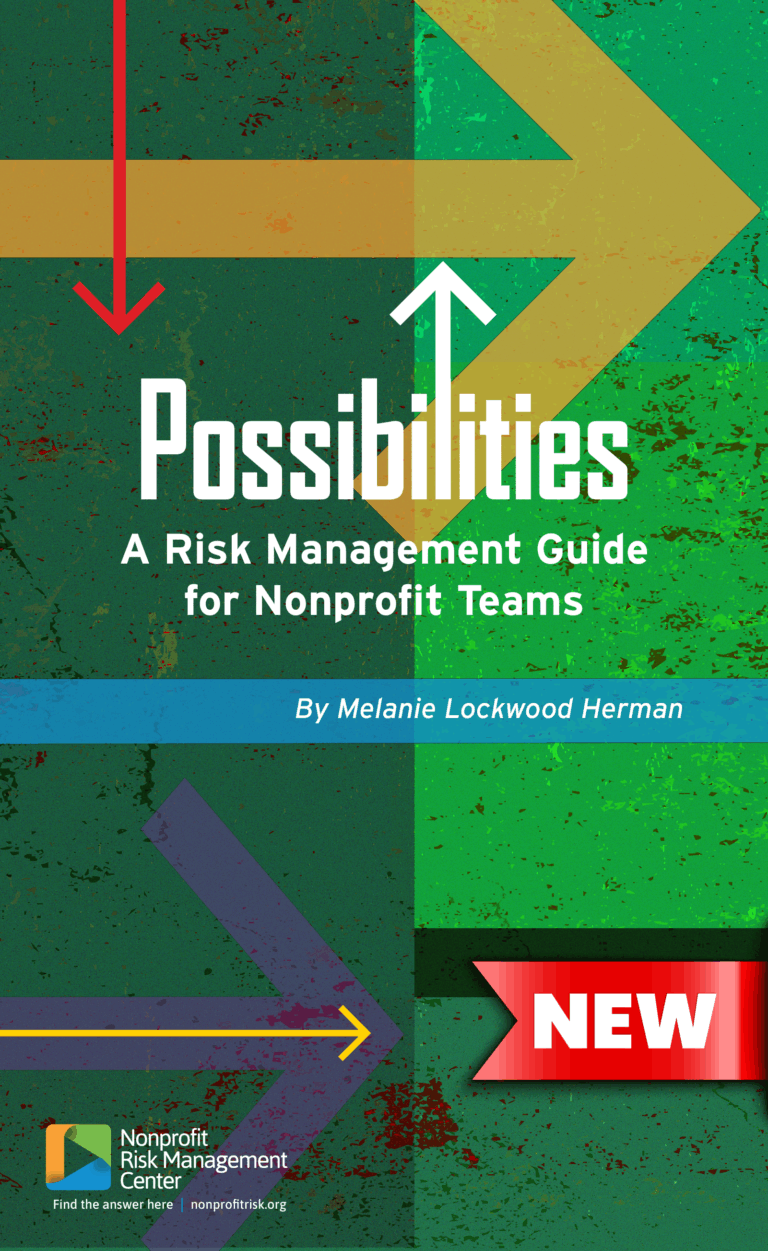
This book provides information for nonprofit teams to assist them in analyzing risk and creating action plans. The book’s chapter takeaways, sidebar insights, and exercises provide the opportunity to grow a team’s practical risk management capacity and capabilities. The materials help deepen a team’s understanding of risk while preparing them for the possibilities.